
Egon Zaberfeld and his neighbors1

I am a bare bones writer meaning….I’m more interested in using a story as a vehicle for thinking about how minds work than describing what a character was wearing as he sat down to eat a bowl of oatmeal.
This is a story about how our early history lives on forever in our memory. One form of memory is in the form of who we are and how we live our lives.
A 7-year-old, Egon Zaberfeld, was devasted when his parents were whisked away in the back of a truck never to be seen again. He grew up to be a super vigilant adult and a mathematician who used math as a way to live his life several kilometers from reality. He uses mathematical equations to measure out his life carefully with a tiny pipette.
Time creeps along and then rushes to some unknown finish line. Egon Zaberfeld is now a 90 old widower who lives next door to the Larry Porter family. Egon’s wife, Susan, died 2 years ago. He remains traumatized by her death. His neighbors Larry Porter and his wife Lynda continue to help Egon but certainly can’t change who he is or how he lives his life. The Porters are unsuccessful in getting him to treat himself better.
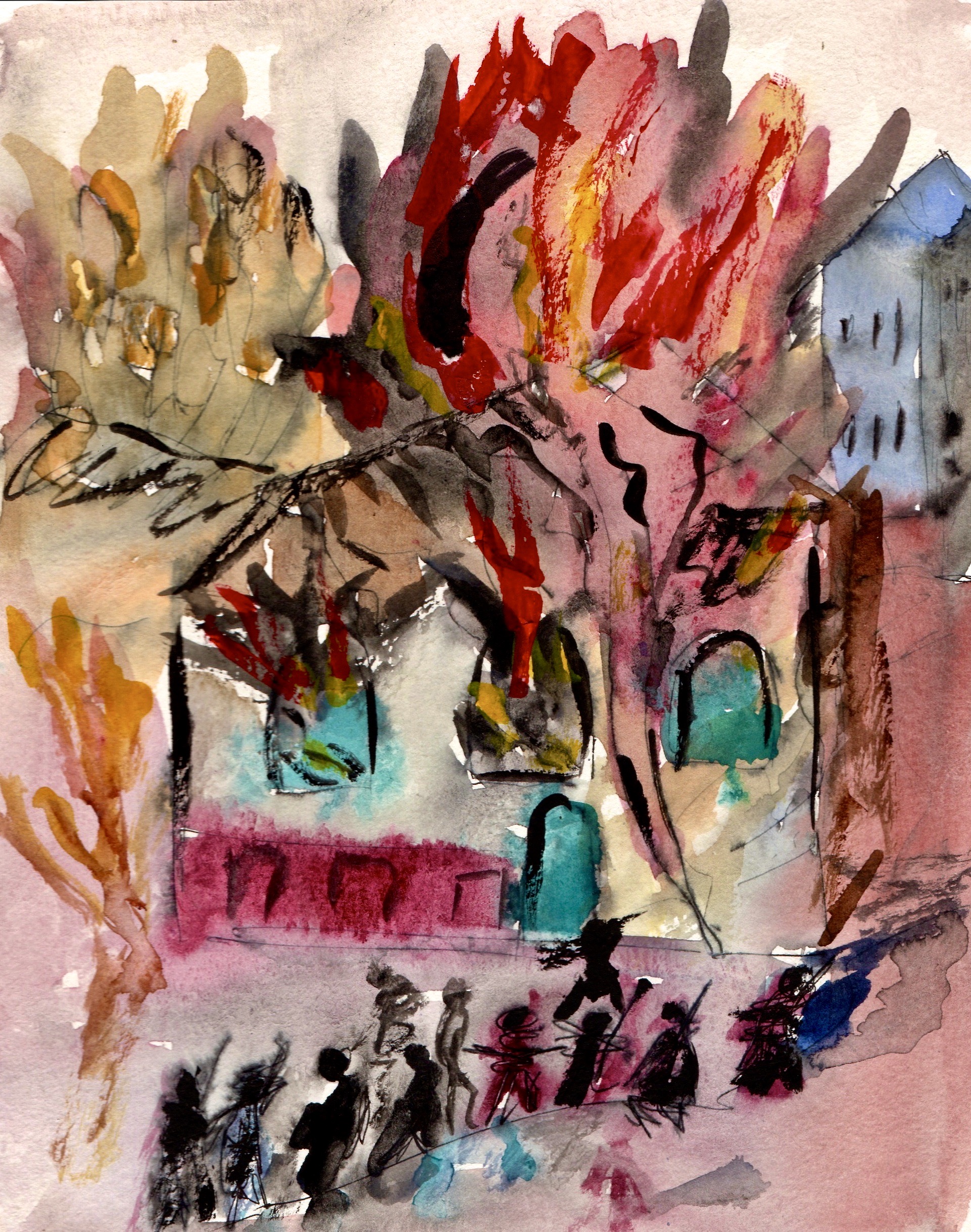
Picture this, or maybe not. Egon Zaberfeld is 7 years old and lives in a tiny village, Kippenheim, which is in south west Germany, a few kilometers from the French border. It is now a bright early October morning in1940. There is a gentle breeze in the air along with the scent of just baked Roggenbrot drifting out from the ovens of the door of the Bäckerei.
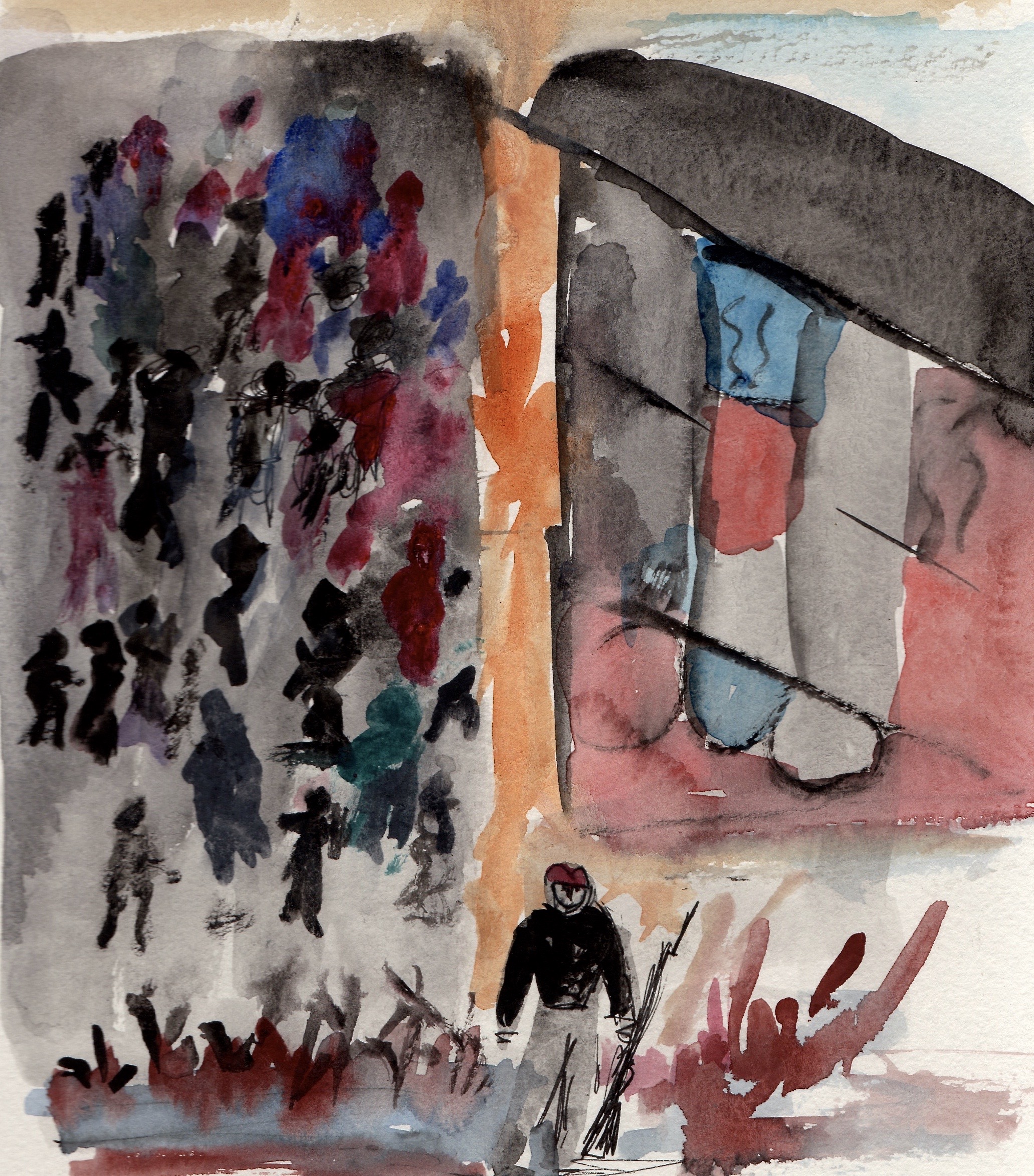
.If you are Jewish this is not the place to be. The Jews of Baden-Wurttemberg are being deported to concentration camps located in Vichy France. Egon’s family is included in that roundup. He stands next to his parents ready to climb onto a truck that would take them to the Vichy concentration camp near the Pyrenes mountains. Some of non-Jews in Kippenheim are watching the scene from a distance. Egon whispers to his father “I have to go to the bathroom.” The father asks, pleads, with the policeman “could the truck wait a few minutes for my son to go to the bathroom before we leave?” The policeman nods ‘yes’. The boy runs home. The front door of his home is open as directed by the police notification sent to all the Jews of Kippenheim. Minutes later he runs back to where the truck stood waiting for him to join his parents and other Kippenhim residents. The truck is gone. Silence. Silence that screams out, “There gone. You have been left behind. You don’t know where they are going. Where should you look for them but then…
Egon starts to cry and then scream. A neighbor of the Zaberfelds, Frau Beck, runs to the child embraces him, holds him and then takes the boy home with her. She tells him he must stay with her family till her parents return. She removes his jacket that displayed the Star of David. She hands him a jacket that is worn by her son Egon’s age. She helps him on with the jacket. She holds him as she talks to him. She tries to sooth him. Egon hugs her, grabs hold of her apron, listens, cries, gasps for breath as she tells him, “For a little while, make believe you are my son, part of our family. I know you can learn to do that. Do that till your parents come back. That is very important to let people know you are my son. In the meantime, my two sons will make sure you are part of the family. When my husband Hans, who is now in the Wehrmacht, comes home he also will also make certain that you are safe and part of our family.
Egon adjusts rapidly to life with the Becks. There were so many surprises. Whenever they sat down for a meal they held hands and recited a prayer featuring Christ their savior. When Frau Beck and her two sons went to church on Sunday morning they left Egon home alone. Many of the foods that the Becks ate were strange to Egon, like thick slabs of bacon. Egon liked the taste. His favorite new food experience was Schwartenmagen. It was a cold cut made with pieces of small pieces of smoked pork in a jelly aspic. He never forgets his parents but nevertheless feels at home with the Becks.
Egon’s parents never return…nor does Hans who is killed on the eastern front. When Frau Beck first hears the news that her husband has been killed she gathers her two sons and Egon in the parlor. They hug each other and sob staring at a picture of Hans on the parlor wall.
Time moves on and doesn’t stop. The war is over and his uncle in New York discovers that his nephew is still alive. Egon, is now 11 years old, is adopted by the uncle and continues to grow up in New York. He misses his parents who are now a fuzzy picture in his mind but misses even more his other family the Becks.
His cranky uncle Fritz was less than enthusiastic about adopting his brother’s son. His not a particularly happy home in part because his pudgy wife nagging wife felt that they already have their hands full raising their ten and twelve-year-old sons, Leo and Mark, who are both struggling in school. The 12-year-old is dyslexic and the younger one refuses to do his homework. Egon also found the dishes that his adopted family ate were strange to him.
However, it turns out that Egon’s sense of adventure his antics, pranks, helps both Leo and Mark come alive. They would never have tried the iron ore trick on their neighbor Walter. Walter saw Egon, along with Leo and Mark standing at the corner of 150th street. He came over and happened to look at Egon’s hand which contained a small rock and several nickels. Walter asked, “What is that rock?” and Egon answered immediately, “Its nickel ore. You rub the rock and you get nickels.” Walter was amazed and asked “What could I trade for the nickel ore?” Egon thought, “How about some of your mother’s jewelry.” Walter rushed to his apartment and came down stairs with a brown bag containing many of his mother’s jewels. Later that afternoon Walter’s mother called. She was hysterical shouting and cursing at Egon. We had no intention of keeping the jewels. It did not however erase Walter’s mother that perhaps her son was an idiot.
On another occasion Egon and his two ‘brothers’ discovered the nature of Boyle’s law. They when to a nearby and took along some hotdogs and several cans of baked beans along with a can opener, matches, and plastic plates. They collected wood, built a fire and roasted their franks. Egon heated the cans of baked beans by putting them directly in the fire. Suddenly there was a huge explosion and hot baked beans were scattered all over. Egon thought they might ignite a forest fire. Egon learned that it was important to open the cans of beans before heating them. Egon had learned about the relationship between the temperature of liquids and pressure inside closed containers.
Egon didn’t get use to his adopted mother’s cooking. Kugel was not to his liking. He missed dishes like the ones Frau Beck would make like spätzle
On the surface Egon was a boy who loves to play make believe, can be funny, has lot of friends but none he would confide in. In middle school he discovers and falls in love with the world of mathematics.
In high school it is clear that he is gifted in mathematics. He is able to excel in subjects like theory of numbers and typology as a sophomore. He derives equations that he calls beautiful. His classmates like him, like his sense of humor but also find him strange, unconventional. Even his practical jokes have an edge to them like, “Lets hide and imagine we turn into someone else so that it is impossible to really find him.
Several premier colleges compete with one another to recruit him. He chooses Colombia in part because it is in New York. They accept him even though he refuses to take classes in English literature or any other subject that he is not interested in. He doesn’t refuse these courses out of arrogance but rather he doesn’t want to limit classes in math or physics. Even as an undergraduate he was able to publish several mathematics papers in prestigious journals. Girls find him good-looking and charming but don’t get him. At parties some coeds flirt with him. He responds by teasing them like, “do you want to see some really erotic equations?” Egon is totally out of their coed experience with the exception of Susan a music major and talented cellist. She too is not a typical party loving pretty coed. Susan finds him attractive, interesting, different. She also feels he understands her. They start to date and then are an inseparable pair.
\When they graduate they get married. He never reveals much about his early history except to tell her where he came from. He does tell her a bit about the Beck family and that he is regularly in touch with them. Susan often plays her cello before they go to bed. He chooses his musical favorites like the cello solo part of Braham’s double concerto. He tries to teach Susan about imaginary numbers, calculus and they both laugh at their lack of success. Shortly after their marriage he travels with her to Kippenheim. When he gets there, he is at first left stunned, speechless paralyzed. He then comes alive and visits with the Beck family. They are delighted to see him and enthusiastic about Susan. Susan does not understand German so as he talks to Frau Beck and his ‘brothers’ in German and they respond in German he translates what is being said in English. The next day Frau Beck arranges for the mayor of Kippenhiem to meet Egon and Susan.
The first thing the mayor says to the couple is “Welcome back to Kippenheim. What a treat for all of us and what an accomplished couple, Egon and Susan, professors. Wonderful. Had you remained in our village you would not have likely been a student in a University. Seeing you now I am sure your parents would have been so proud of you.” At which point he realized that he had entered a world he should never have brought up in conversation. The mayor was flustered. All he was able to muster, in almost a whisper, “We are so sorry about what happened. Those were horrible times for all of us.” Egon said nothing in reply.
Egon and Susan are happy, well more accurately content with each other. Both of them become academics. Susan teaches music theory and cello at New York University. Egon is hired by Columbia as a Professor of Mathematics and is tenured two years later. He is the star of the Mathematics Department. Susan and Egon live together, quietly, love each other, but tend to live separate lives. They chose to not have children even though they enjoy the company of kids.
Egon remains bilingual. Can sometimes think of a word in German rather than in English. He is always polite, soft spoken and never late. Egon also has maintained his taste for foods that were his childhood favorites like Schwartenmagen, head cheese. He thought it was delicious while Susan felt it was a disgusting cold cut.
Susan and Egon enjoyed their role as adopted grandparents of the Porter’s twin girls Gloria and Gina. When they were very young Susan and Egon were built in baby sitters who were always entertaining. Susan would often play music for the twins. Gloria was taking piano lessons and was particularly eager to hear Susan play her Cello. On one occasion Susan said, “How would you like hearing a piece written just for the cello by someone called Johann Sebastian Bach. It is called a Bach suite.” She started to play and then stopped when Gloria started to laugh. She asked her, “Why are you laughing?” and she answered, “I know a tune that goes with a Bach piece of music. It goes, ‘John Sabastian Bach sat upon a tack and got right up again’ and Gina and Susan joined in laughing.
Egon would tickle their imagination wings by telling them all sorts of stories especially those that featured magical fantasy animals especially ones that were naughty and forever getting into trouble. He introduces them to animals like an inflated pink elephant, a dazzle night hawk, lizards that can dance, and then the ominous German Land Lizard that would chase the lark elk through the sassafras grass and then looked for him hiding behind the lollypop trees. The girls asked Egon about naughty things he did when he was young. He took great pleasure in telling them some of his stories but also thought “maybe I shouldn’t have’ but couldn’t stop himself. “Promise you won’t tell anyone but…ok…when I was in kindergarten I put my hand down the kindergarten teachers’ blouse.” The girls giggled. He didn’t tell them he was kicked out of school because he was Jewish. He told them the story about how he liberated the rabbits who were in cages in the Biology Building where he went to college. Egon said, I felt bad for the rabbits but they suspended me from school anyway.”
Gina told Egon I am glad you rescued the rabbits.”
When the girls got older it was Gina was who was struggled with algebra in middle school. Larry asked Egon would he be her math mentor. Egon had the almost magical skill of teaching kids’ math. Larry laughed when he said that Egon and could teach math to a rock. He was incredibly successful and Gina became mathematical star in middle school. The two girls were often recruited to teach their classmates algebra.
Time tip toes on. The girls go off to college and Egon and Susan miss having them around almost as much as their parents.
As the Zaberfelds got older. They retired from their University positions although both remained very actively involved in their careers.
\Time then took a sharp turn when Susan suddenly died. Egon was devasted, paralyzed, and remained so even two years later. Egon was stuck without his wife. The Porters tried to help him move on with his life. Lynda would encourage him,“ Egon, enjoy your remaining years. Allow yourself some pleasures. Get rid of your car that looks like it was badly wounded in battle. Buy a new one at least one that isn’t a death trap.”
Egon replied, “don’t want a new car and I have my reasons.”
Egon answered, “I have my reasons”
Egon tended to wear the same outworn clothes over and over. The Porters would encourage him to spruce up his wardrobe to no avail. Lynda said “I would be happy to go shopping with you. Egon thanked her but added, I calculated the value of getting a new blazer but figured out that given its cost I wouldn’t get enough value out of the purchase before I died. Also, I am very particular about the color of the blazer. Should it be traditional blue or maybe go all out for a red one. Requires thought.”
Without showing it, Lynda’s jaw dropped in her head at his reply. He is so funny so stubborn so set in his ways.
Larry was successful in getting Egon to join a nearby senior center. He was not however able to get Egon to become active in the center, to use some of their programs, to socialize with others. Egon continued to live a solitary life. Even at the Senior center he preferred playing some of the members chess rather than to talk to them.
He explained to Larry that he always measures the value of things he might acquire. He would ask himself how much time would I have with a car that replaces my banged-up Prius. He would calculate how long he figured he would live and then calculate the value returned based on the price and his life with the car. His life had become a mathematical personal universe along with memories of Kippenheim, his parents as he knew them as a child. It was a world that excluded others.
He did continue to enjoy his favorite treat Schwartenmagen. That was often his preferred lunch at the senior center in place pf the lunches available to him at the center at no cost. Egon asked Larry to try his delicacy. Larry said, Thanks but not thanks. I guess you have to have had an early experience with that cold cut to enjoy it. Too bad.
No one knows how to make some of my other favorite foods found in Frau Beck’s kitchen. I can still smell and taste them but only in my mind. There are the dumplings (Knödel), served with smoked meats and fruit, bratwurst served with cucumber salad made with just vinegar and oil, and then there is hand cheese (Handkäse) that hung in cheese cloth that was ripe enough to eat when it stank up the kitchen. Why are those dishes so vivid in my memory?
Wait a minute. Why wouldn’t they be vivid for Egon. While we wait Egon, at 90 is still alive as his history. What he also realizes that he is alone with that history. His uncle has died some years ago. He doesn’t have much of a relationship with his uncle’s kids, his kind of sibs. The descendants of Kippenhiem that left Germany before the war have all died years ago. What about their children, the ones that were about his age, most are likely not around anymore. He adores the Porters and feels part of their family but, but, Egon feels alone with his history, his, and no mathematical equation will change that. Once more he finds the picture of his family the Zaberfeld’s of Kippenheim. He stares at it then puts it on the table face down and closes his eyes.
Egon closes his eyes and imagines and imagines, sees characters in his story appearing on stage. The story/play is over. The characters take a bow. The audience sits quietly. No applause. Some of the characters say a few words.
The mayor of Kippenheim steps forward and tells the audience that his predecessor did all they could to make the ordeal for the deportees as painless as possible. Frau Beck steps forward. She is wearing an apron and says “I think the “handkase’ is ready to eat.” Egon steps forward and introduces the former head of the German consulate in Stuttgart, Herr Munster. “I did what I could during those awful days. The crowds wanting papers that could rescue them were overwhelming. It was far too late, impossible, to obtain rescue papers for the people who climbed onto the truck in Kippenhiem in October 1940.”
Egon says nothing. He hears voices coming from the wings of a stage. He kept looking at his fellow actors while the audience continues to sit silently. The curtain comes down.
1Dedicated to my brother Werner and to so many who hauled away in the back of trucks or on packed trains never to return, including many of my relatives, from villages like Kippenheim in Baden, southwest Germany.